Bell Gardens warns of possible $8M budget hole if Measure BG fails and casino revenue drops

Bell Gardens officials are sounding the alarm ahead of the June 2 election, warning the city could face a budget hole approaching $8 million if voters reject Measure BG, a quarter-cent sales tax, and state cardroom regulations survive an ongoing court battle.
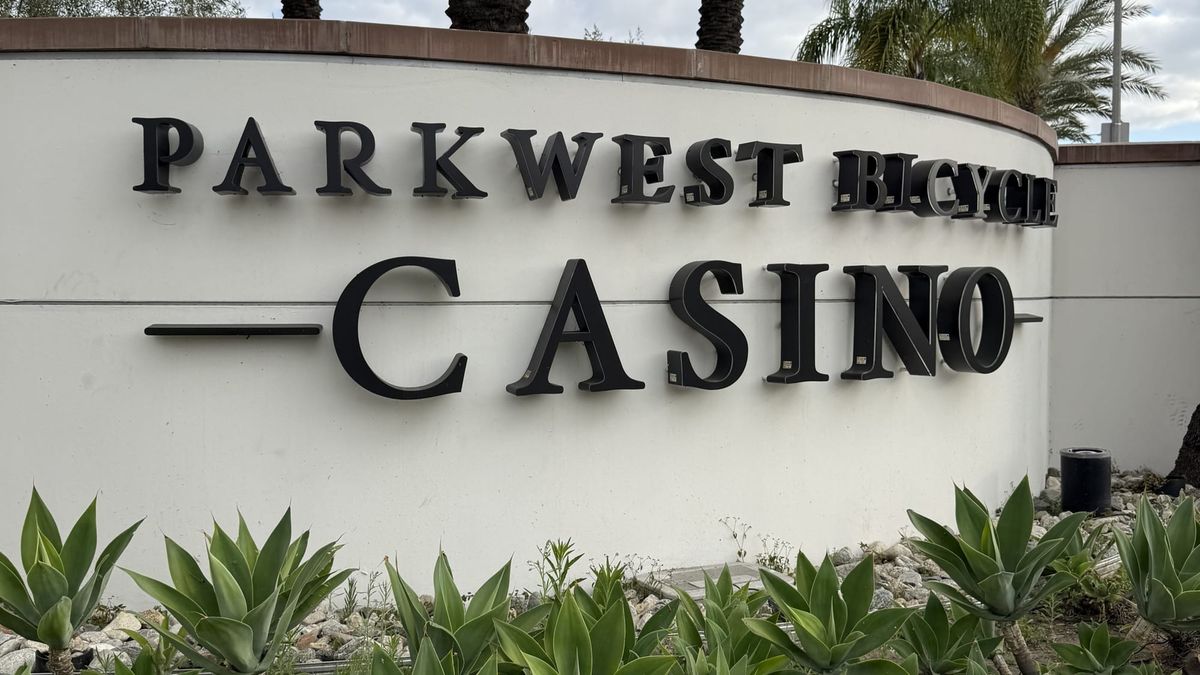
City officials say the worst-case scenario could force cuts to police, parks, recreation programs and other core city services as Bell Gardens grapples with growing deficits and possible losses tied to the Parkwest Bicycle Casino, a cardroom in Bell Gardens and the city’s largest revenue source.
Earlier this year, the City Council formally declared a fiscal emergency tied to the potential loss of cardroom revenue before voting to place Measure BG on the ballot.
“For Bell Gardens, these are not abstract budget decisions,” Councilmember Francis De Leon Sanchez said at a May 12 press conference opposing Attorney General Rob Bonta’s regulations targeting blackjack-style games and player-dealer games at California cardrooms.
“These are real services, real families, and real consequences,” she said.
Measure BG would add a quarter-cent sales tax to help fund police, parks, street repairs and recreation programs. City officials estimate the measure would generate about $975,000 next year as the city braces for possible losses tied to new state gambling regulations.
“We wanted to keep the money local to our city,” De Leon Sanchez said in a recent interview. “Is Measure BG going to solve our issue? No, it’s not, but it’s definitely going to help.”
During a May 11 budget meeting, city leaders painted a grim picture: rising costs, growing deficits and uncertainty surrounding cardroom revenue. Officials warned that if the worst-case scenario unfolds, the city could eventually be forced to begin cutting services funded through the general fund.
“From a staff perspective… these are scary things to talk about out loud,” City Manager Michael B. O’Kelly said during the discussion.
Bell Gardens is projecting a $1.97 million deficit this fiscal year and a $3.67 million deficit next year, assuming voters approve Measure BG and a court blocks Bonta’s cardroom regulations.
But officials warned the outlook could worsen dramatically. During the discussion, Councilmember Marco Barcena noted that the city’s projected deficit, combined with an estimated $4 million to $7 million loss in cardroom revenue and the failure of Measure BG, could push the budget shortfall close to $8 million. O’Kelly confirmed, saying the city is modeling a roughly 35% hit to cardroom revenue under the regulations.
“At that point, we would have to decide what services we’re going to start eliminating versus continuing, right?” De Leon Sanchez asked during the meeting.
In a phone interview, De Leon Sanchez warned the cuts could hit public safety directly.
“There are going to be cuts when it comes to public safety as well,” she said. “Whether that means less officers out on patrol or we have to cut officer positions altogether.”
She also warned Bell Gardens may eventually be forced to scale back programs for seniors, youth and low-income residents if revenues continue to decline. Among the services that could be affected are free and low-cost classes, rental assistance, and the Community Family Service Center, which includes a community pantry and other assistance programs.
“Programming for our senior citizens, programming for our youth, and programming just all together,” she said when asked what services could be affected.
A city built around casino revenue
Bell Gardens has long relied on The Bicycle Casino, located on the city’s western border near the 710 Freeway, as a major source of city funds. Cardroom taxes accounted for roughly 38% of Bell Gardens’ general fund revenue in fiscal year 2025-26.
“The revenue that we receive from the casino is our number one source of income,” De Leon Sanchez said.
City projections estimate cardroom revenue at roughly $17.4 million next year, down about $1.58 million from the current adopted budget.
Officials said ongoing construction and renovation work at the Bike that disrupted access and operations likely contributed to the decline. Still, city leaders say the larger threat comes from Sacramento.
According to O’Kelly, the attorney general’s proposed regulations could slash Bell Gardens’ cardroom revenue by roughly 35%.
“That’s the concern,” O’Kelly said. “People might potentially go to tribal casinos instead.”
The fight between tribal casinos and cardrooms escalated last year when the California Department of Justice advanced new gambling regulations banning blackjack-style games at cardrooms and requiring the player-dealer position to rotate among at least two players every 40 minutes. If no player accepts the role, the game would be shut down and the table cleared.
California tribes backed the regulations, arguing state law grants tribes exclusive rights to offer house-banked casino games like blackjack. In response, the California Gaming Association and multiple cardrooms filed lawsuits in March arguing the “rules reverse decades of settled law.”
Last week, San Francisco Superior Court Judge Richard Darwin granted a preliminary injunction temporarily blocking the rules from being enforced while litigation continues, with Bonta’s office telling ABC10 it would “respond appropriately in court” to the ruling.
Cardroom operators warned the changes could force casinos to shut down tables, slash revenue, and potentially close businesses altogether.
In a recent Sacramento Bee op-ed, California Gaming Association President Kyle Kirkland warned the regulations would severely restrict player-dealer games that are “central to our businesses and the primary reason customers walk through our doors.”
“The state has pulled that foundation from under us,” De Leon Sanchez said at the press conference, referring to the new regulations. “These regulations may benefit powerful gaming interests, but working class communities like Bell Gardens are the ones being asked to pay the price.”
De Leon Sanchez also criticized Bonta’s office for what she described as a lack of communication with affected cities and cardrooms.
“When we requested meetings with the Attorney General and his team, we were denied,” she said. “I don't think he's given us the opportunity to discuss this item with him.”
As chair of the California Cities for Self-Reliance Joint Powers Authority, a coalition of cardroom cities including Bell Gardens, Commerce, Compton and Hawaiian Gardens, De Leon Sanchez said concerns about revenue losses are widespread among local governments that rely heavily on casino taxes.
“Hawaiian Gardens would be devastated if their card room got rid of those games,” she said. “They're really going to have to assess what they're able to provide the residents at that point.”
A financial cushion. For now.
Despite the alarm bells, Bell Gardens officials stressed the city is not on the verge of going broke.
According to the proposed budget, the city’s projected general fund balance at the end of fiscal year 2025-26 is roughly $23.5 million, including about $17.7 million in assigned and unassigned reserves.
O’Kelly said those reserves are exactly why the city has been able to weather financial shocks in recent years without major disruptions to public services.
“This is why the fund balance is there,” O’Kelly said during the meeting. “It’s there to cushion any shortfalls in revenues or any increases in expenditures so the services are maintained year by year.”
O'Kelly also pointed out that Bell Gardens' reserves are larger than those of many neighboring cities because the city relies so heavily on a single source of revenue, comparing the Bicycle Casino's role in Bell Gardens to Disneyland in Anaheim and Knott's Berry Farm in Buena Park.
Officials pointed to the COVID-19 pandemic as an example. Even after the temporary shutdown of the Bicycle Casino wiped out millions in city revenue, Bell Gardens largely maintained core services by relying on reserve funds built up during stronger years.
“You still got the same response time from the police department,” O’Kelly said. “In some cases, you got more service.”
Councilmember Jorgel Chavez acknowledged the potential loss in cardroom revenue would be painful and said passage of Measure BG will be critical to maintaining city services, but he also expressed confidence in the city’s long-term financial outlook.
“We got through (the pandemic) and we will get through this too,” he wrote in an email.
De Leon Sanchez said the city’s reserves may help cushion the blow in the short term, but warned they are not a permanent solution.
“Short term, is it going to help us? Yes,” she said. “Long term, no. We’re going to have to make some really difficult decisions.”
De Leon Sanchez warned the city may eventually struggle to maintain its current level of support for residents if cardroom revenue continues to decline.
“Long term, I don’t know if we’re going to be able to continue helping our residents to the level that we’ve been thus far,” she said.